
High Energy Efficiency
Requires only around 10 kWh of electricity per kg of H₂ — roughly one-fifth of conventional water electrolysis.
HYDROGEN
Produce low-carbon and green hydrogen from natural gas and biomethane with Graforce plasma technology—delivering clean hydrogen while creating valuable solid carbon.
Explore Hydrogen Solutions
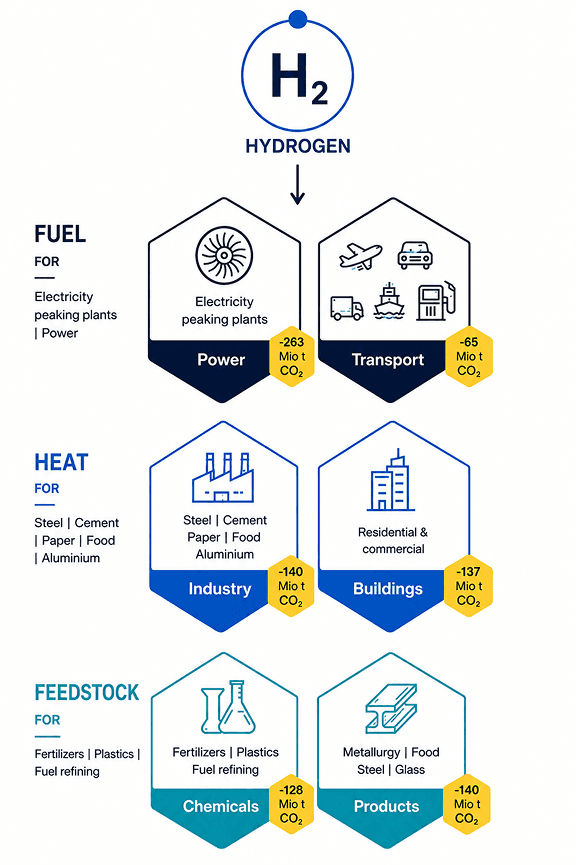
Hydrogen is more than a clean fuel—it is a critical industrial feedstock and energy carrier. Its versatility enables low-carbon solutions across energy, transportation, manufacturing, buildings, and chemicals.
Why Graforce
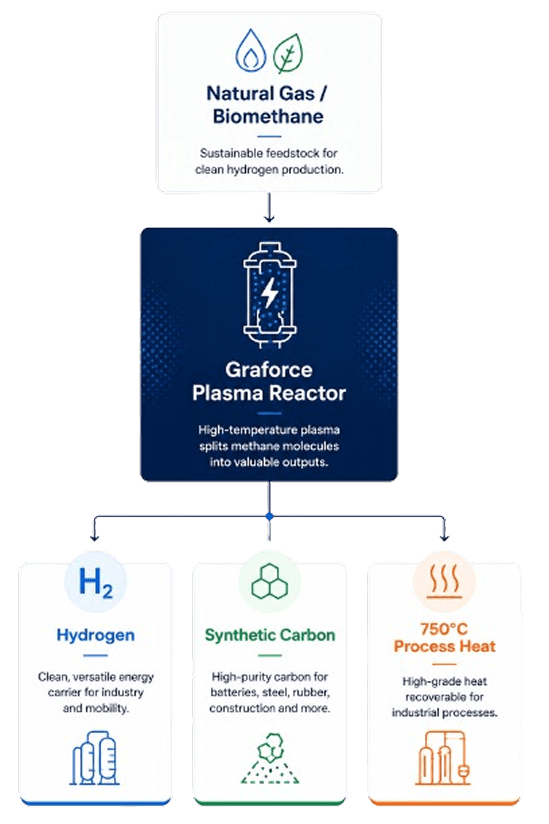
Instead of relying on conventional electrolysis, Graforce uses methane plasma technology to produce hydrogen with significantly lower energy demand while generating valuable synthetic carbon and recoverable process heat.
Requires only around 10 kWh of electricity per kg of H₂ — roughly one-fifth of conventional water electrolysis.
Produces 3 kg of high-purity solid carbon per kg of H₂ as a marketable industrial raw material.
Reuses 25–30% of high-temperature reaction heat directly within existing thermal processes.
Containerized modules from 0.5 MW up to 20 MW plants for flexible industrial deployment.
Why Methane, Not Water
Conventional electrolysis needs roughly 50 kWh to split 1 kg of hydrogen from distilled water — a German cost of around €9.00/kg. Hydrogen is bound far more loosely in methane or biomethane. Graforce's plasma reactor exploits that difference, bringing energy demand down to around 10 kWh/kg, with high-temperature waste heat recovered and reused on top.
Two Feedstocks, One Reactor
Both routes run on the same modular Plasmalyzer® technology. What changes is the feedstock — and what that means for your carbon balance.
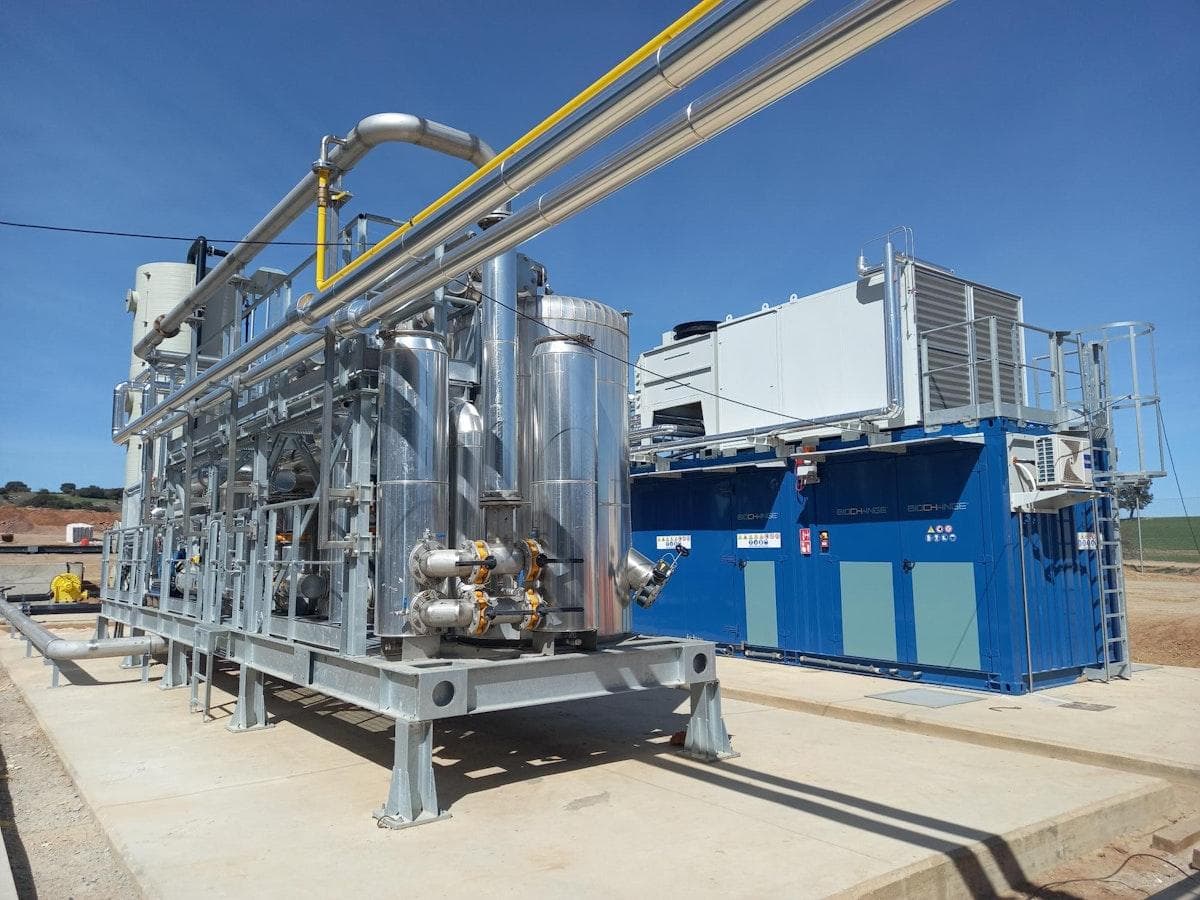
Produced directly from natural gas, LNG or LPG — with no CO₂ released in the process and solid carbon recovered as a marketable co-product.
Explore Low Carbon · Hydrogen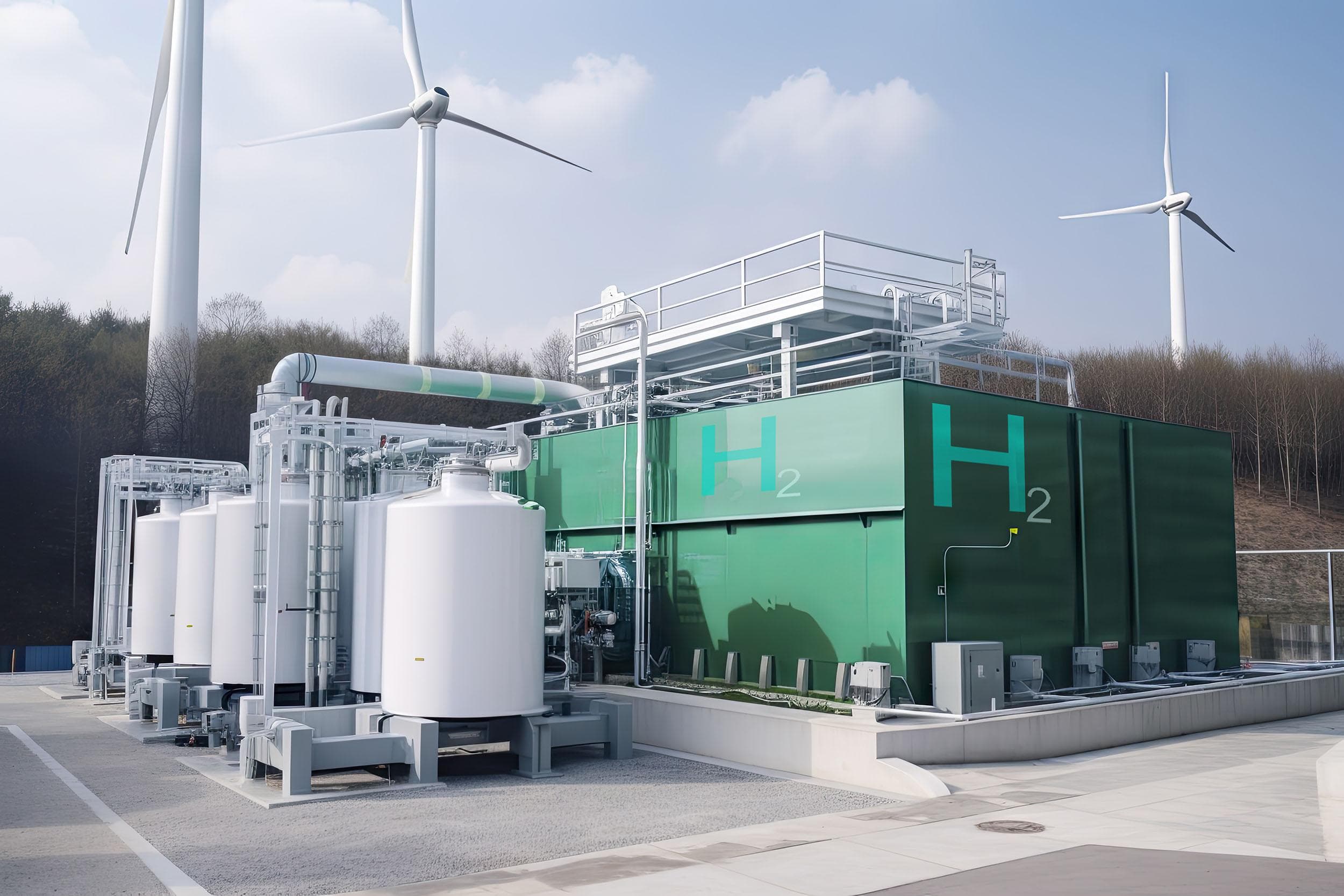
The same reactor, fed with biomethane — achieving a negative CO₂ footprint when biogenic carbon is permanently bound in solid form.
Explore Green · HydrogenCarbon Creates Value
High-purity solid carbon, tunable up to graphite-like quality, is what makes this a market-ready alternative to Carbon Capture Storage rather than just a cleaner fuel.
Check in carbon page →High-purity carbon for next-generation batteries and energy storage.
Increase steel production with a valuable solid carbon alternative.
Durable carbon materials for advanced construction applications.
Replace carbon black with high-performance carbon additives.
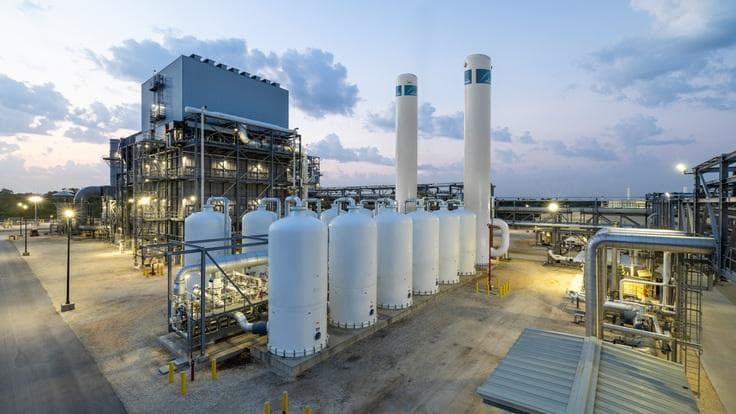
Case Study · Carbon Creates Value
Both pathways run on the plant architecture already operating at RAG Austria AG, Kremsmünster — not a lab demonstration.
FAQ
Hydrogen produced by splitting natural gas, LNG or LPG in a plasma reactor — no CO₂ is released in the process, and the carbon is captured as a solid, sellable material.
The same reactor fed with biomethane or biogas instead. Because the carbon is biogenic and permanently stored in solid form, the process can achieve a negative CO₂ footprint.
Hydrogen is bound far more loosely in methane than in water. Splitting methane needs around 10 kWh versus roughly 50 kWh/kg for water electrolysis — about a fifth of the energy.
Roughly 3 kg of high-purity solid carbon is recovered per kg of hydrogen, sold into steel, construction, battery-material and agricultural markets — keeping that carbon out of the atmosphere long-term.
Around 10 to 10.7 kWh per kg of hydrogen, factoring in recovery and reuse of 25–30% of the high-temperature waste heat generated during the reaction.
Talk to Graforce's engineering team, or go deeper into the technology behind both pathways.