
High-Temperature Plasma
Generates the energy required to dissociate methane molecules.
Introducing Graforce Technology
Graforce methane plasmolysis converts methane into clean hydrogen and solid carbon using high-temperature plasma, enabling efficient hydrogen production without direct process CO₂ emissions.
Methane Plasmolysis
Graforce methane plasmolysis uses high-temperature plasma to split methane (CH₄) into hydrogen (H₂) and solid synthetic carbon (C). Unlike conventional hydrogen production methods, the carbon remains in a stable solid form instead of being released as carbon dioxide, enabling efficient hydrogen production with valuable carbon co-products.
Methane plasmolysis is a high-temperature plasma process that separates methane into its elemental components without combustion. Inside the plasma reactor, methane molecules are dissociated into hydrogen gas and solid carbon. The hydrogen is further processed for industrial use, while the carbon becomes a valuable material for multiple industrial applications.
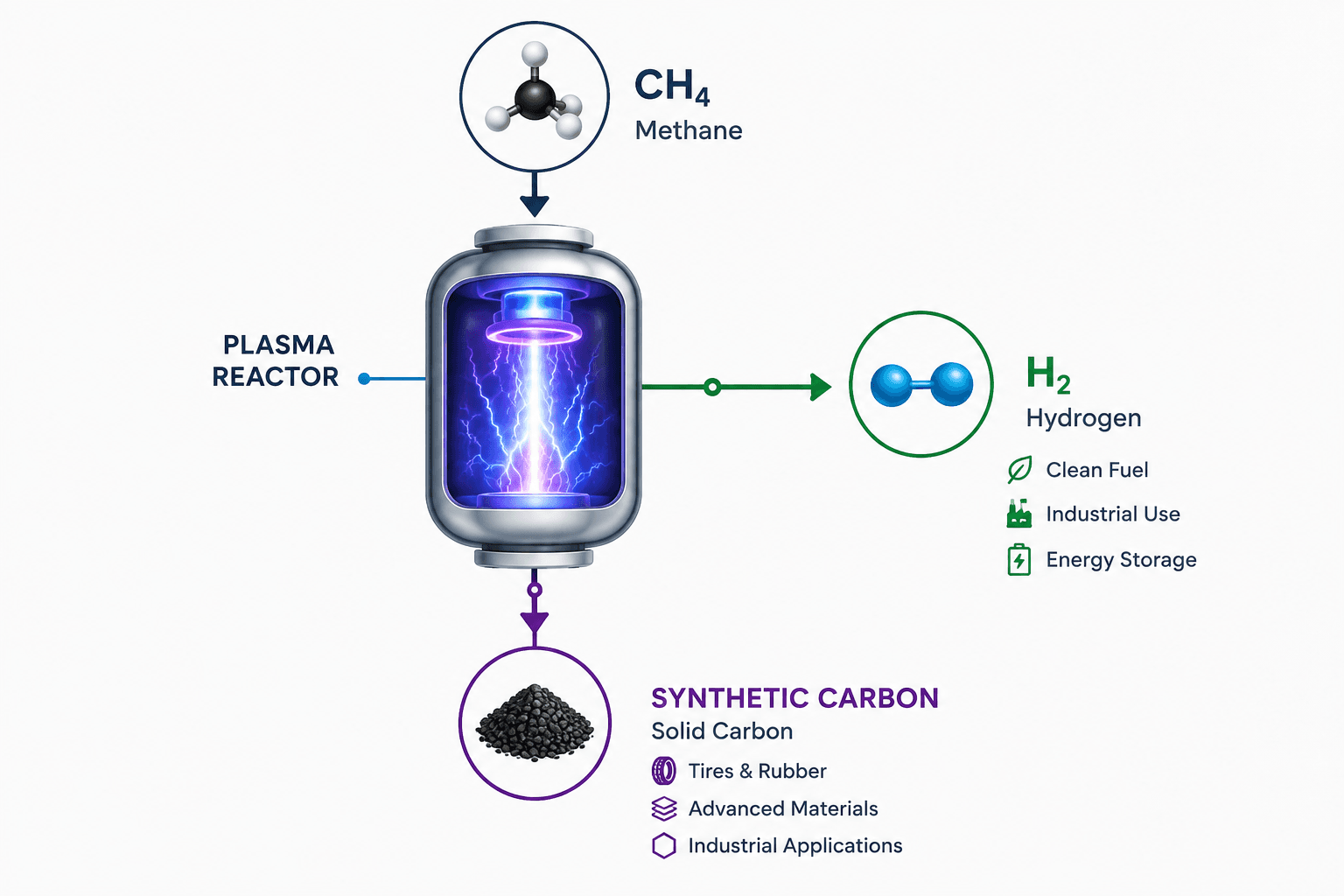
Generates the energy required to dissociate methane molecules.
Produces hydrogen suitable for downstream purification.
Captures carbon in a stable solid form for industrial applications.
Designed for scalable industrial deployment.
How It Works
Graforce methane plasmolysis uses high-temperature plasma to split methane (CH₄) into hydrogen (H₂) and solid synthetic carbon (C). Unlike conventional hydrogen production methods, the carbon remains in a stable solid form instead of being released as carbon dioxide, enabling efficient hydrogen production with valuable carbon co-products.
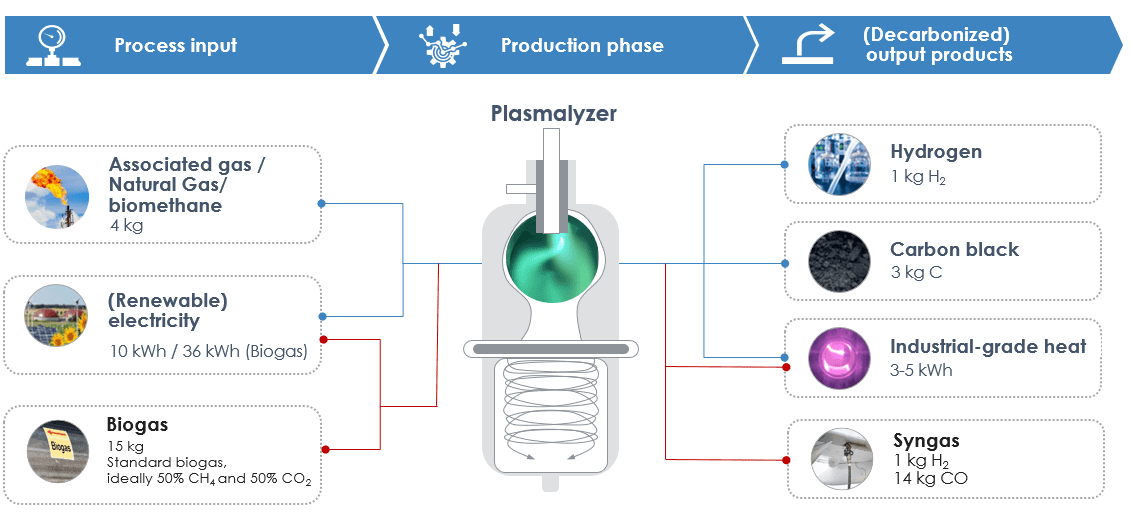
Natural gas, associated gas, biomethane, or biogas is supplied to the Methane Plasmalyzer together with renewable electricity. The selected feedstock determines the operating configuration while providing the carbon and hydrogen required for the plasma conversion process.
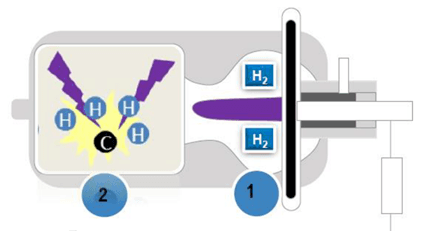
Inside the Plasmalyzer, electrical energy generates a high-temperature plasma field that dissociates methane molecules into hydrogen and solid carbon. Unlike combustion-based processes, the carbon remains in solid form, enabling valuable material recovery.
The process simultaneously produces multiple valuable output streams. Hydrogen proceeds to downstream purification, solid carbon is collected for industrial applications, industrial-grade heat can be recovered, and syngas may be generated depending on the selected operating mode.
| Stage | Description |
|---|---|
| Input | Natural Gas, Biomethane, Associated Gas, Biogas, Renewable Electricity |
| Conversion | High-Temperature Plasma Dissociation |
| Outputs | Hydrogen, Carbon Black, Industrial Heat, Syngas |
Modular Reactor Concept
The Graforce Methane Plasmalyzer® features a modular architecture that enables deployment across a wide range of hydrogen production capacities. From containerized units to large-scale industrial plants, the same core plasma technology can be adapted to meet different operational requirements.
.png&w=3840&q=75)
A compact, transportable system designed for rapid deployment and integration.
A modular hydrogen production unit suitable for smaller industrial applications.
A medium-scale installation that increases hydrogen production capacity through modular expansion.
A large-scale industrial solution designed for high-capacity hydrogen production.
Integrated Carbon Handling System
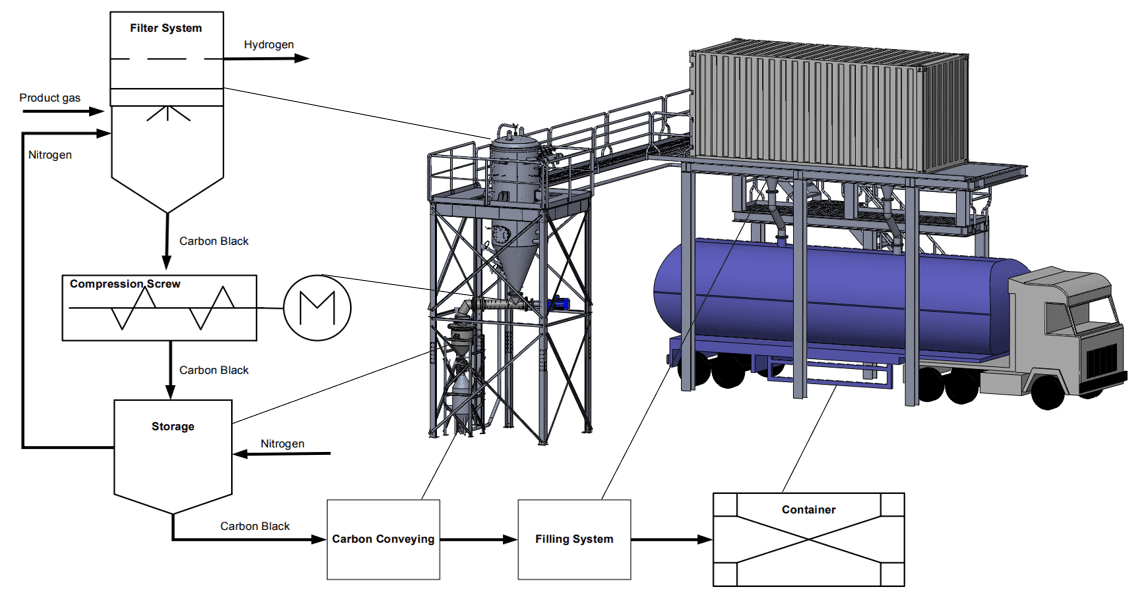
The recovered synthetic carbon is separated from the product gas and processed through an integrated handling system. The process includes filtration, compression, temporary storage, conveying, and container loading for industrial transportation.
Heat Recovery
The Methane Plasmalyzer® simultaneously generates three valuable outputs:
Using electricity from renewable sources, methane plasmolysis enables efficient hydrogen production while also producing usable thermal energy as part of the process. The integration of industrial-grade heat contributes to improved overall energy utilization.
Integrated Carbon Handling System
The engineering process integrates several system components into a continuous production workflow.
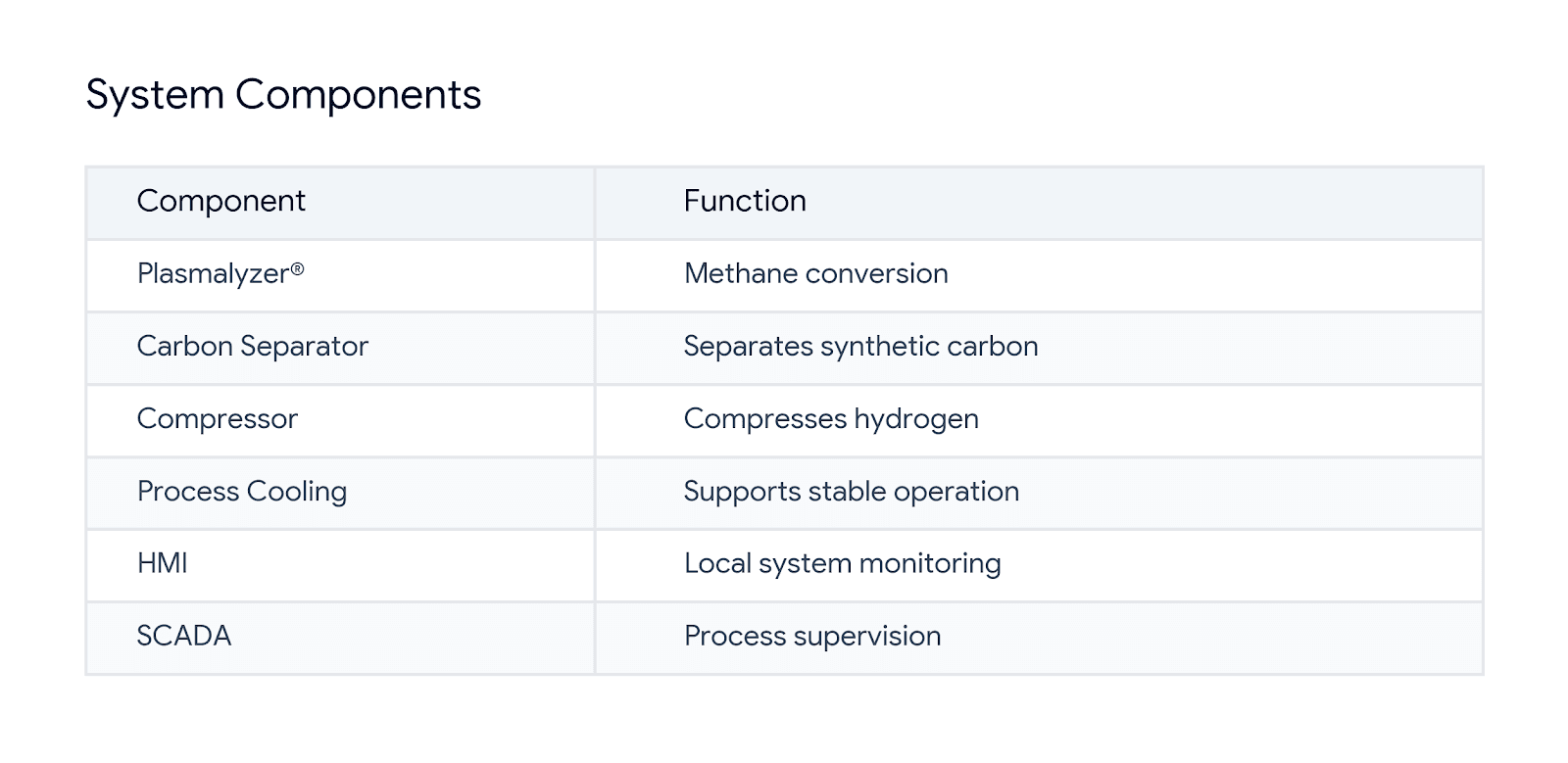
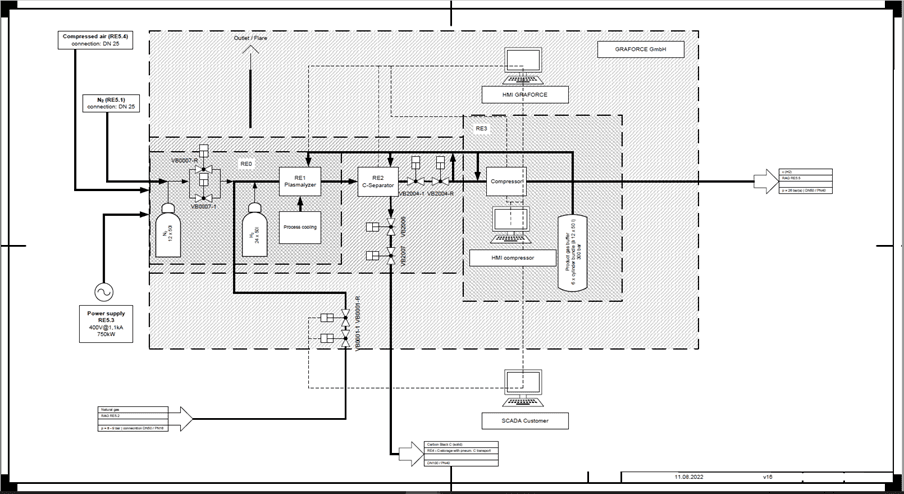
The engineering diagram illustrates how hydrogen is processed after methane conversion while the recovered synthetic carbon is directed to the downstream carbon handling system.
FAQ
Methane plasmolysis is a high-temperature plasma process that splits methane into hydrogen and solid synthetic carbon without producing process-related CO₂ emissions during the conversion.
The Methane Plasmalyzer® can operate with natural gas, associated gas, biogas, and biomethane.
Yes. Graforce offers modular Plasmalyzer® systems ranging from containerized units and 0.5 MW modules to 5 MW and 20 MW industrial plants, enabling scalable deployment.
After separation from the product gas, the synthetic carbon passes through an integrated handling system consisting of filtration, compression, storage, conveying, and container filling for industrial transportation.
Yes. The Methane Plasmalyzer® is designed to operate using electricity from renewable energy sources, supporting lower-carbon hydrogen production.
Discover how the Graforce Methane Plasmalyzer® converts methane into hydrogen, synthetic carbon and industrial-grade heat through scalable plasma technology designed for industrial deployment.