High Purity
Produced as a high-quality carbon with very low impurity levels.
Synthetic Industrial Carbon
Produced as a co-product of Graforce's methane plasma process, synthetic carbon combines high purity, controlled material properties, and long-term carbon storage potential. It enables applications across metallurgy, construction materials, batteries, pigments, and industrial manufacturing while supporting industrial decarbonization.
Material Overview
Graforce synthetic carbon is intentionally engineered as a functional industrial material. Produced during methane plasma pyrolysis, it combines high purity with controlled morphology and stable processing characteristics, enabling applications from metallurgy and construction materials to advanced battery technologies and permanent carbon storage.
Produced as a high-quality carbon with very low impurity levels.
Engineered particle structure suitable for multiple industrial processes.
Compatible with pelletization, conveying, storage, and large-scale material handling.
Transforms captured carbon into valuable industrial products instead of emissions.
Material Characterization
Graforce synthetic carbon has been comprehensively characterized using advanced analytical techniques including Raman spectroscopy, Scanning Electron Microscopy (SEM), Transmission Electron Microscopy (TEM), and elemental composition analysis. These methods provide detailed insight into the material's chemical composition, structural ordering, particle morphology, and suitability for demanding industrial applications.
D, G & 2D band analysis evaluates graphitic structure and defect density.
Reveals particle morphology and agglomerate structure, supporting industrial processing decisions.
Shows amorphous carbon, linear carbon, and nanosheet features in the material microstructure.
| Property | Result |
|---|---|
| Carbon | 99.9% |
| Moisture | 0.52–1.09% |
| Volatile Matter | 1.79–2.03% |
| Ash Content | 0.02–0.31% |
| Fixed Carbon | 96.82–97.43% |
| Iron (Fe) | ~0.007% |
| Aluminum (Al) | <0.01% |
Carbon Properties
Graforce synthetic carbon combines a conductive carbon structure with optimized pore characteristics and controlled particle properties. Comprehensive laboratory testing evaluates electrical conductivity, surface area, pore structure, oil absorption, and particle size distribution to support industrial deployment.
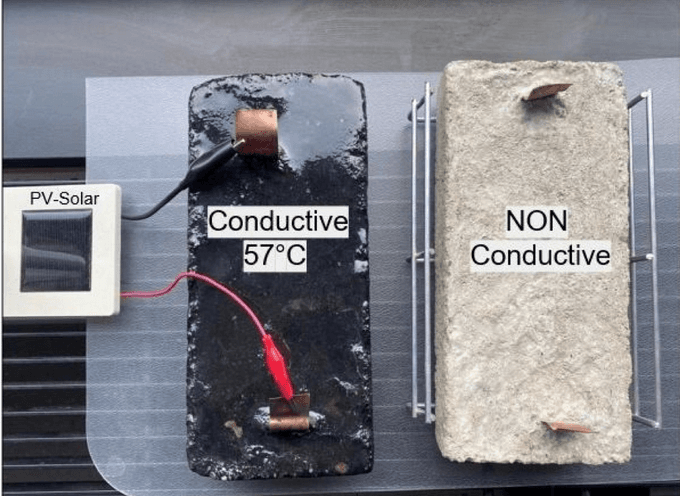
Graforce synthetic carbon exhibits electrical conductivity, enabling applications where electrically active carbon materials are required. The demonstrated conductivity supports future use in conductive concrete, graphite electrodes, battery materials, and other electrically functional products.
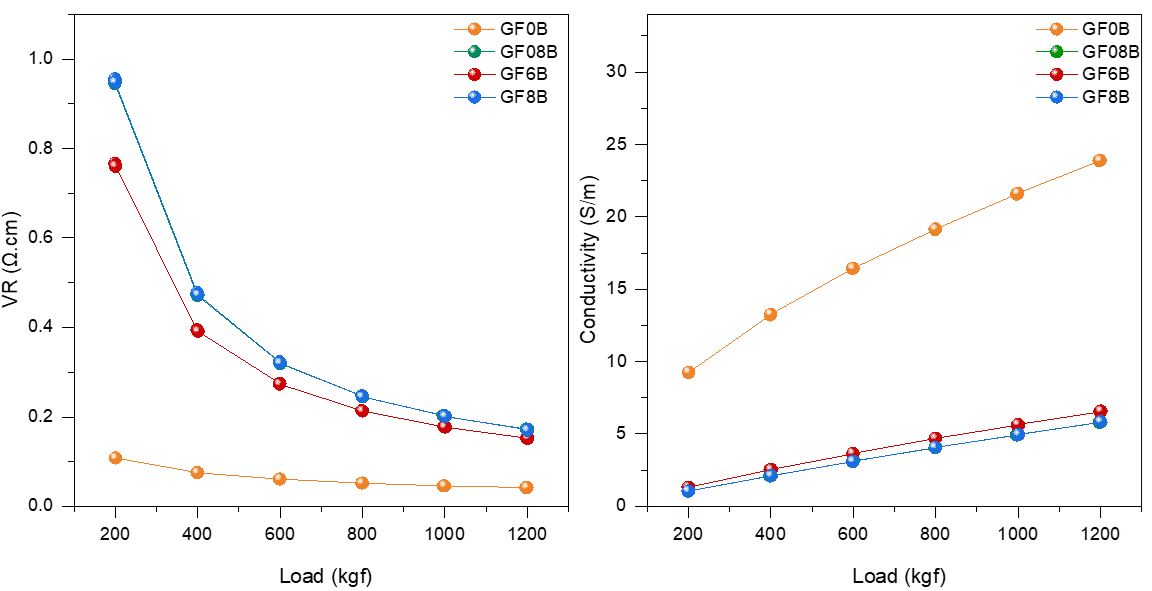
Measured conductivity increases with applied load, demonstrating stable electrical performance across tested samples.
The pore structure of Graforce synthetic carbon has been characterized using Brunauer–Emmett–Teller (BET) analysis to evaluate its accessible surface area, pore volume, and pore size distribution. These characteristics directly influence adsorption behavior, material handling, and suitability for advanced industrial applications.
| Property | GF08 | GF6B | GF8B |
|---|---|---|---|
| BET Surface Area (m²/g) | 38.0 | 32.2 | 31.8 |
| Total Pore Volume (cm³/g) | 0.091 | 0.084 | 0.082 |
| Micropore Volume (cm³/g) | 0.045 | 0.037 | 0.036 |
| Mesopore Volume (cm³/g) | 0.046 | 0.047 | 0.046 |
| Average Pore Diameter (nm) | 4.74 | 5.25 | 5.17 |
A combination of micropores and mesopores provides functional surface accessibility while maintaining stable material behavior.
Higher specific surface area than conventional industrial carbon black, achieved without costly activation processes.
Controlled pore development supports conveying, storage, pelletization, and large-scale manufacturing.
Suitable for battery materials, filtration systems, catalysts, plastics, rubber compounds, paints, coatings, and lightweight composites.
To improve industrial handling and reactor performance, Graforce has developed binder-free dry mechanical pelletization as well as water-assisted pelletization. Both methods preserve the purity of the plasma-derived carbon while optimizing handling characteristics for different process requirements.
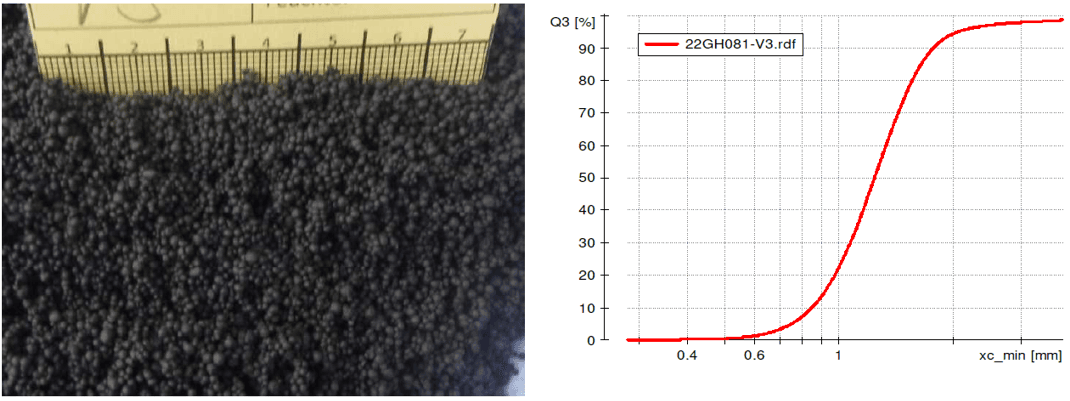
Graforce converts fine carbon powder into 0.8–1.2 mm pellets using purely mechanical compaction without chemical binders. The resulting pellets maintain high carbon purity while improving transport, storage, and reactor handling.
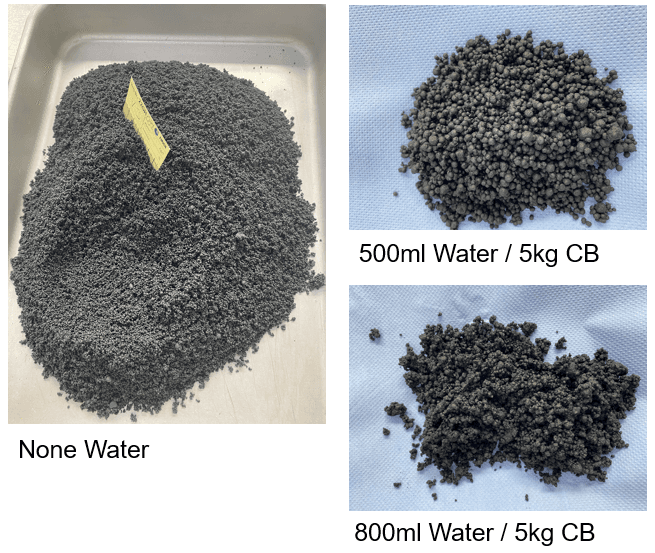
Water-assisted pelletization allows pellet consistency to be adjusted by varying the water content, enabling different handling characteristics without introducing foreign additives.
Engineered for Industrial Performance
Graforce synthetic carbon has been evaluated for thermal stability, structural characteristics, and particle handling performance to support industrial deployment. These measured properties demonstrate its suitability for high-temperature processing, material handling, and integration into large-scale manufacturing applications.
| Test Condition | Result |
|---|---|
| Nitrogen (N₂) | Stable above 800°C |
| Maximum Weight Loss | 2.3% |
| Air Atmosphere | Combustion begins at ~650°C |
Graforce synthetic carbon remains highly stable under inert conditions, making it suitable for high-temperature industrial processes. Thermogravimetric analysis demonstrates minimal decomposition in nitrogen while maintaining controlled oxidation behavior in air.
Oil Absorption Number reflects the structural complexity of carbon aggregates and is an important indicator for reinforcement and industrial processing. Graforce synthetic carbon demonstrates substantially higher structural values than conventional N990 carbon black.
| Material | Result |
|---|---|
| N990 | 33.19 |
| GF08B | 72.85 |
| GF6B | 73.30 |
| GF8B | 74.30 |
Stable above 800°C under nitrogen with minimal weight loss.
OAN values of 72–74 ml/100 g, significantly higher than conventional N990.
Engineered for continuous industrial handling, dosing, and reactor integration.
Validated through laboratory characterization and material performance testing.
Industrial Applications
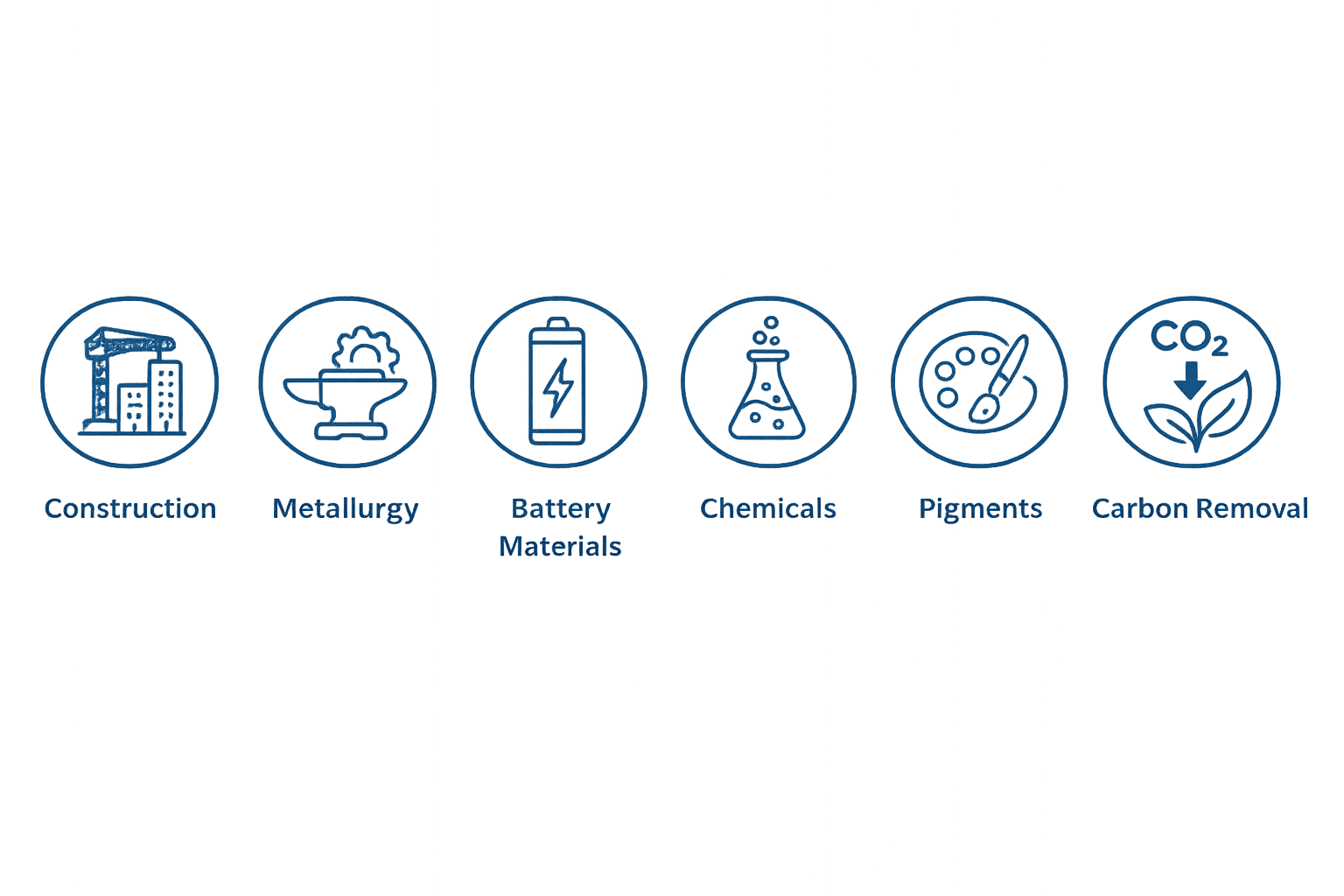
Graforce synthetic carbon is engineered as a sustainable industrial material that transforms captured carbon into long-term value. With high purity, engineered conductivity, controlled morphology, and proven industrial performance, it is being evaluated across multiple industries to replace fossil-derived carbon materials while reducing lifecycle emissions.
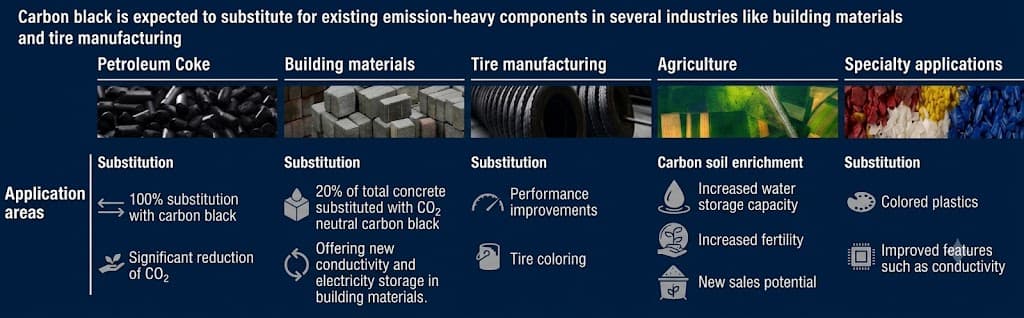
Graforce carbon can be incorporated into cement, concrete, mortar, and asphalt to reduce embodied carbon while introducing electrical conductivity and permanent carbon storage. It enables the development of multifunctional building materials without relying solely on fossil-derived additives.
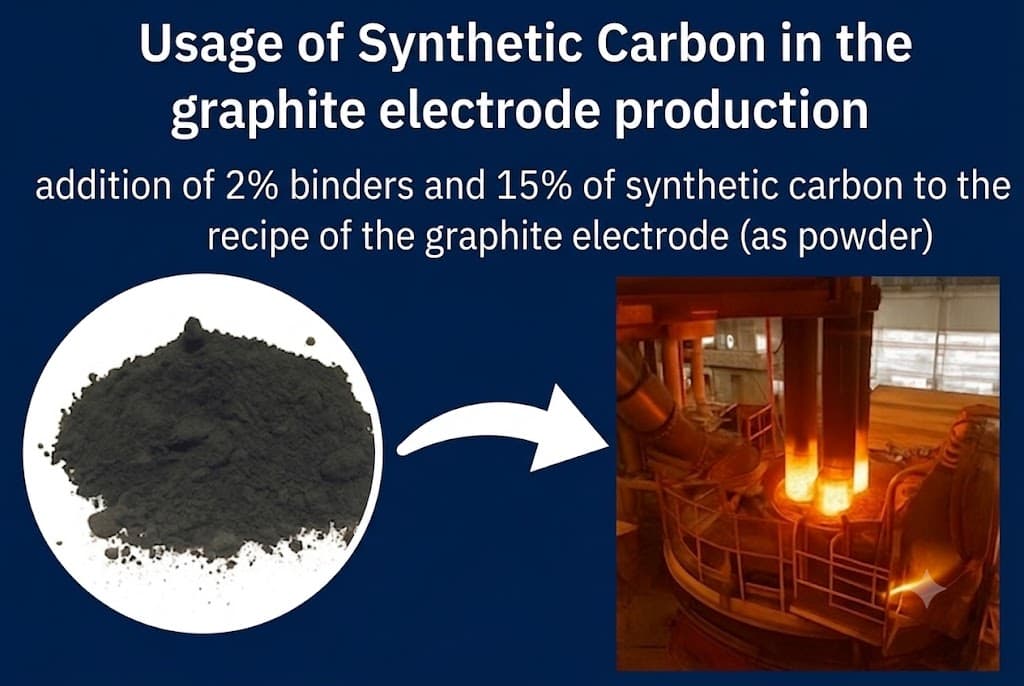
High-purity synthetic carbon provides a sustainable alternative to petroleum coke and conventional fossil carbon sources used in metallurgy, steelmaking, foundries, and graphite production.
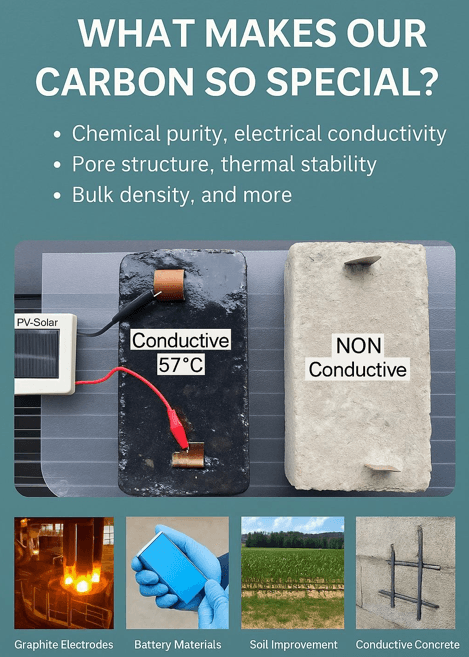
The combination of conductivity, high purity, and engineered carbon structure enables evaluation as a precursor for advanced battery materials and synthetic graphite applications.
Engineered carbon supports numerous specialty chemical applications where high fixed-carbon content, controlled morphology, and low impurity levels are required.
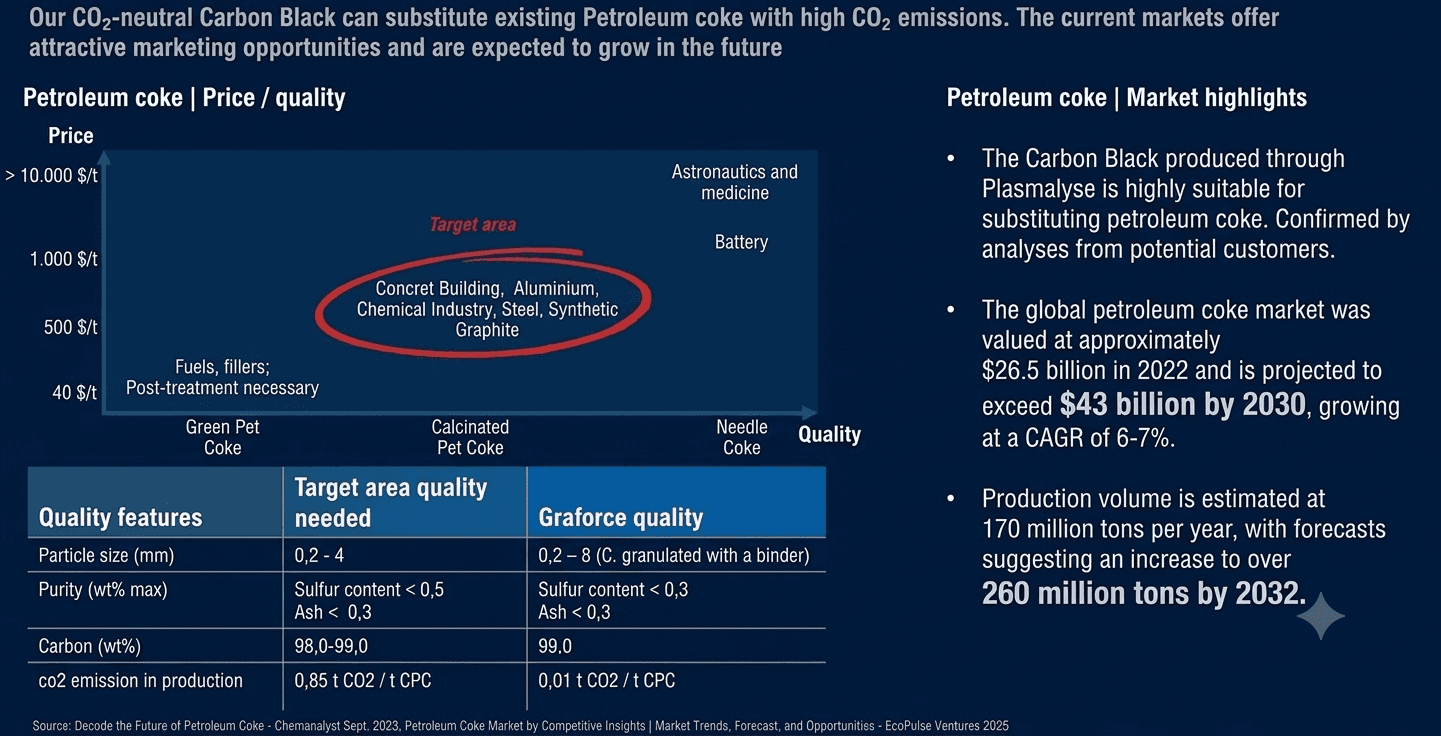
Synthetic carbon can function as a long-term carbon sink while improving soil performance. Ongoing evaluations demonstrate its potential to increase water retention, enhance soil fertility, and support regenerative agricultural practices.
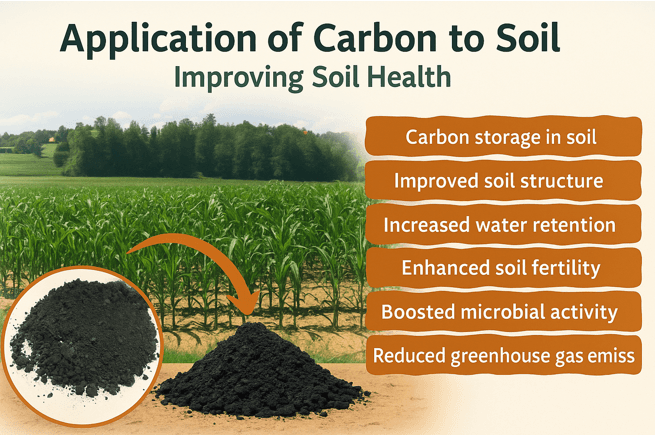
High-purity synthetic carbon provides a sustainable alternative to conventional fossil-derived materials used in treatment, remediation, and environmental technologies.
Metallurgy & Foundry
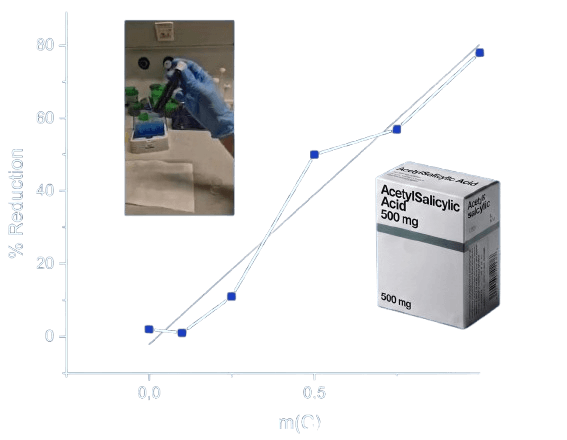
Petroleum coke is a critical carbon source for the metallurgical, aluminium, graphite, and chemical industries. Graforce synthetic carbon provides a sustainable alternative by combining industrial-grade material quality with significantly lower production-related CO₂ emissions. Engineered through methane plasma pyrolysis, it is designed to meet the performance requirements of existing industrial processes while supporting the transition to lower-carbon manufacturing.
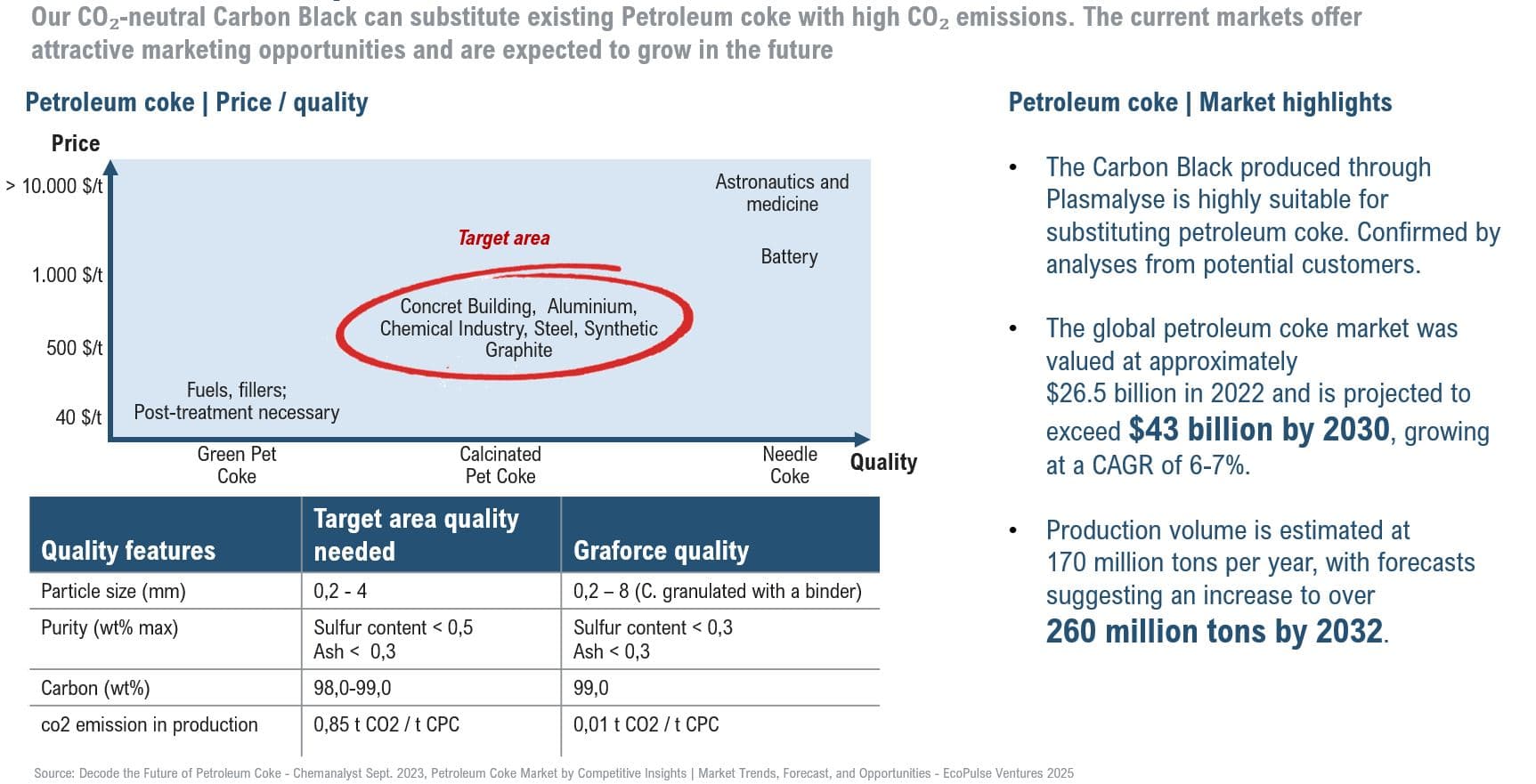
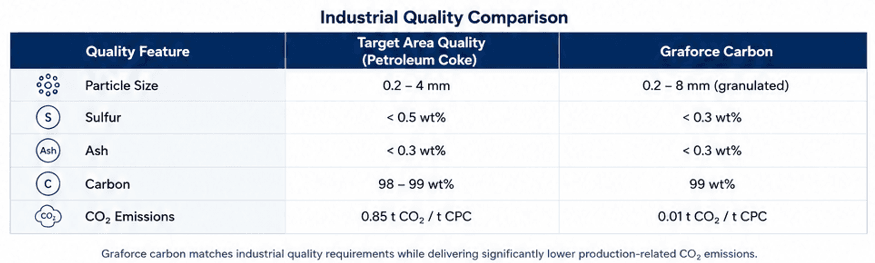
Graforce synthetic carbon is suitable for a range of industrial applications where petroleum coke and conventional carbon materials are currently used.
Carbon source for metallurgical processing.
Industrial carbon additive for foundry applications.
Potential substitute for petroleum coke in anode production.
Suitable feedstock for graphite manufacturing.
Carbon source for industrial chemical processes.
Material suitable for electrode manufacturing applications.
Battery & Specialty Graphite
Graforce synthetic carbon is being evaluated as a sustainable carbon source for specialty graphite, battery anodes, aluminium anodes, and emerging cathode materials. Laboratory validation demonstrates compatibility with graphite manufacturing while supporting future low-carbon energy materials.
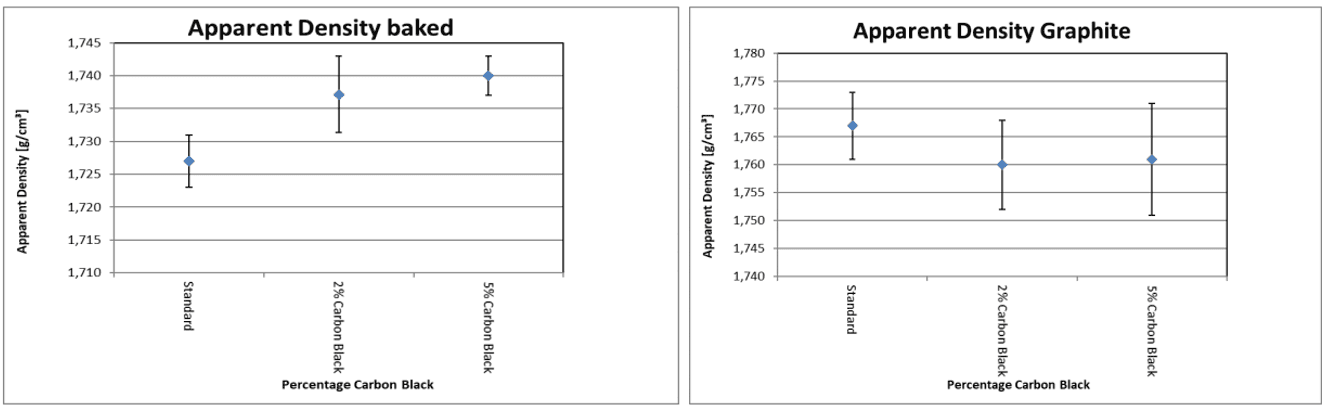
Apparent density testing was performed to evaluate the influence of Graforce carbon during graphite manufacturing. The results demonstrate increased baked apparent density with carbon addition and comparable apparent density after graphitization.
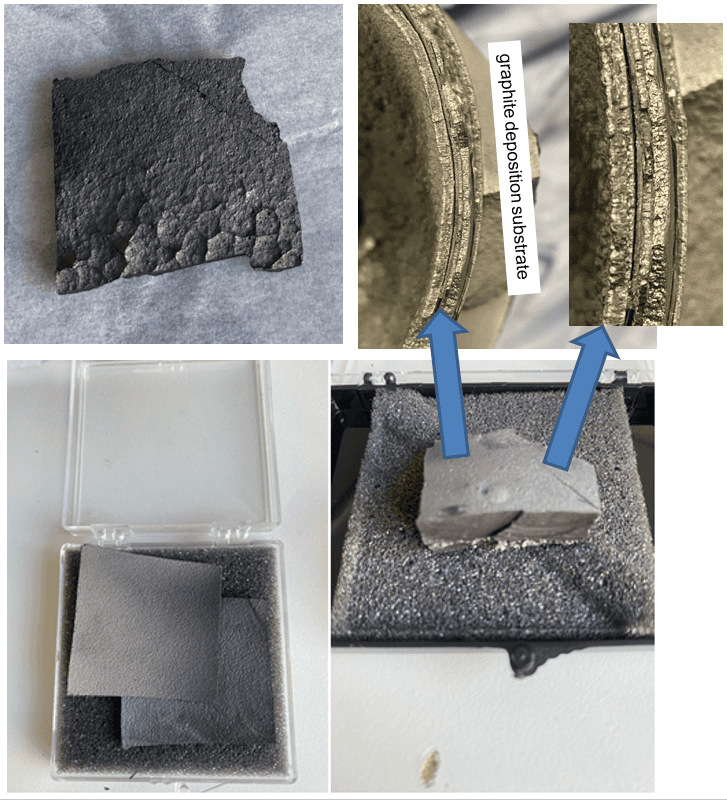
Laboratory trials confirm successful graphite formation using Graforce synthetic carbon. Experimental observations demonstrate that the material can participate in graphite manufacturing processes while maintaining the characteristics required for advanced carbon applications.
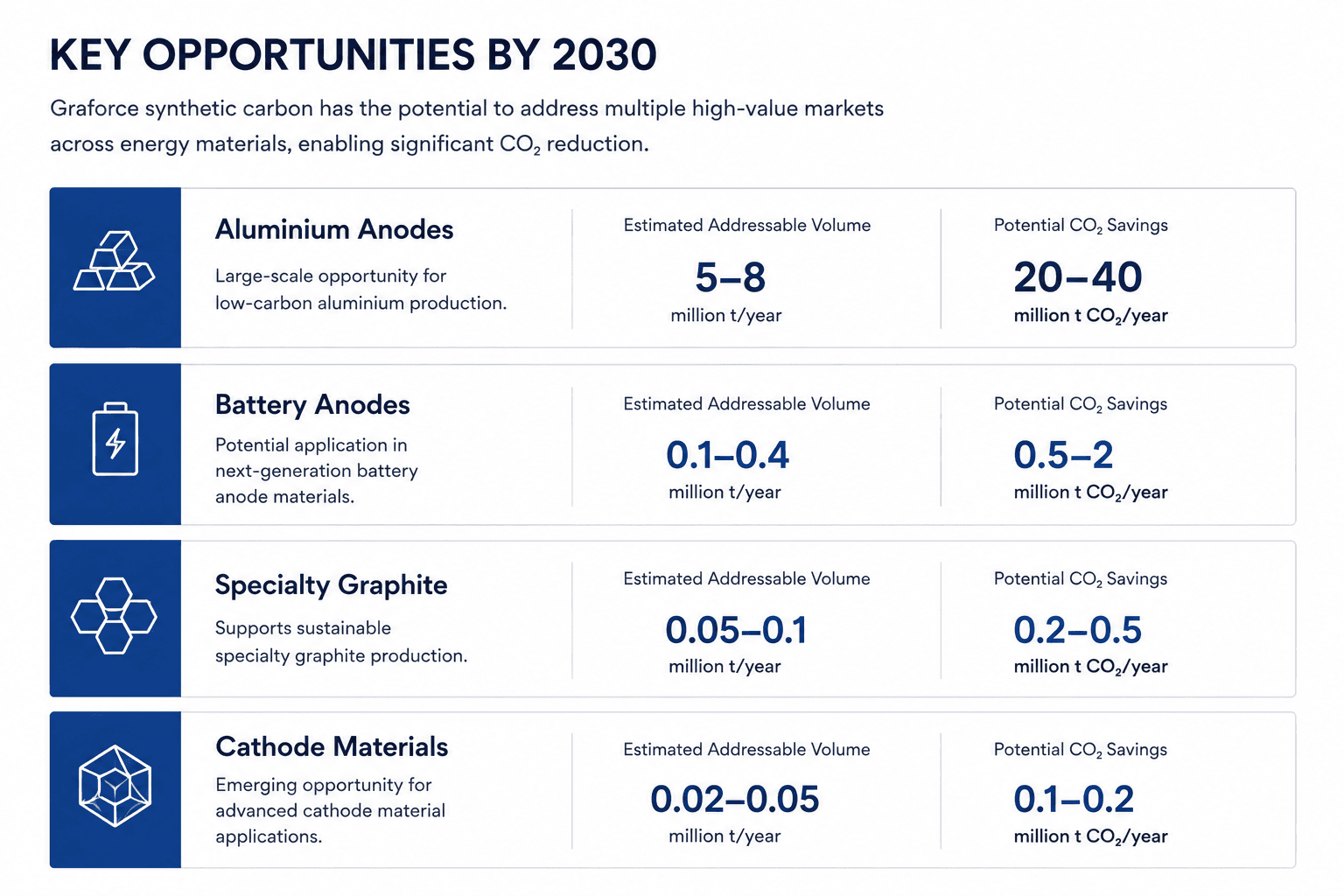
Graforce synthetic carbon has the potential to support future demand across advanced energy materials. Estimated addressable markets include aluminium anodes, battery anodes, specialty graphite, and emerging cathode materials, representing significant industrial opportunities alongside substantial CO₂ reduction potential.
Whether you're exploring metallurgy, battery materials, environmental applications, or advanced carbon solutions, our team can help evaluate how Graforce synthetic carbon fits your industrial requirements.