
Low-Carbon Hydrogen
Supports hydrogen-based direct reduction.
SOLUTIONS / STEEL · LIME · CEMENT
Produce low-carbon hydrogen, valuable solid carbon, and recoverable process heat to support decarbonized steelmaking, lime, and cement production through Graforce's Methane-Plasmalyzer® technology.
INDUSTRY OVERVIEW
Hydrogen-Based Direct Reduction (H₂-DRI) is one of the most promising pathways for reducing emissions in steel production. Graforce enables cost-effective hydrogen production from natural gas or biomethane without process-related CO₂ emissions while simultaneously generating valuable solid carbon and high-temperature process heat.
Supports hydrogen-based direct reduction.
Approximately 3 kg of solid carbon is produced for every 1 kg of hydrogen.
Recoverable heat can be integrated into industrial processes.
Compatible with natural gas, biomethane, and flare gas.
GRAFORCE SOLUTION
Methane is dissociated in a high-temperature plasma reactor into hydrogen and solid carbon. Hydrogen is supplied to the direct reduction process, while solid carbon and process heat are recovered as valuable industrial resources.
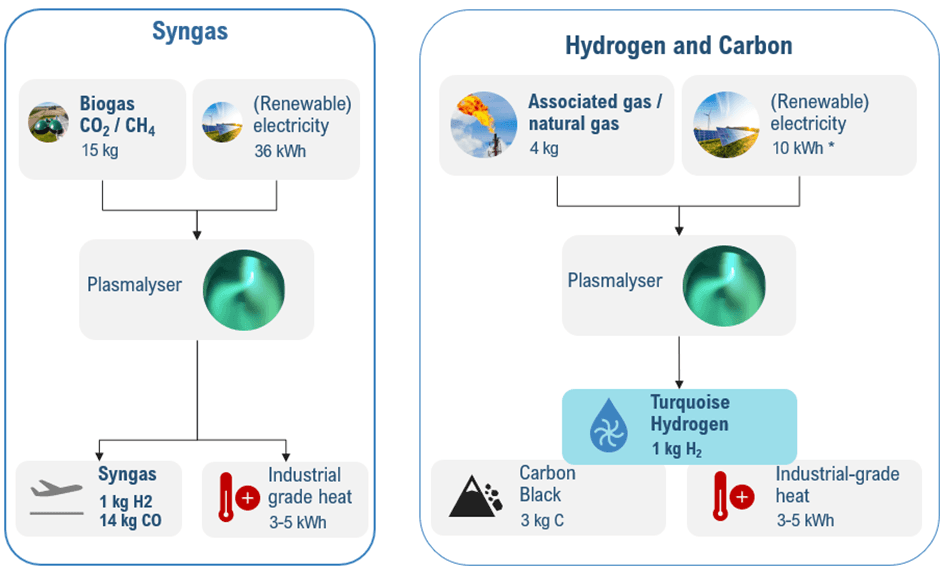
Natural gas or biomethane is prepared for plasma conversion.
Methane is split into hydrogen and solid carbon.
Hydrogen supports low-carbon reduction of iron ore.
High-temperature process heat is reused in the plant.
INDUSTRIAL BUSINESS CASE
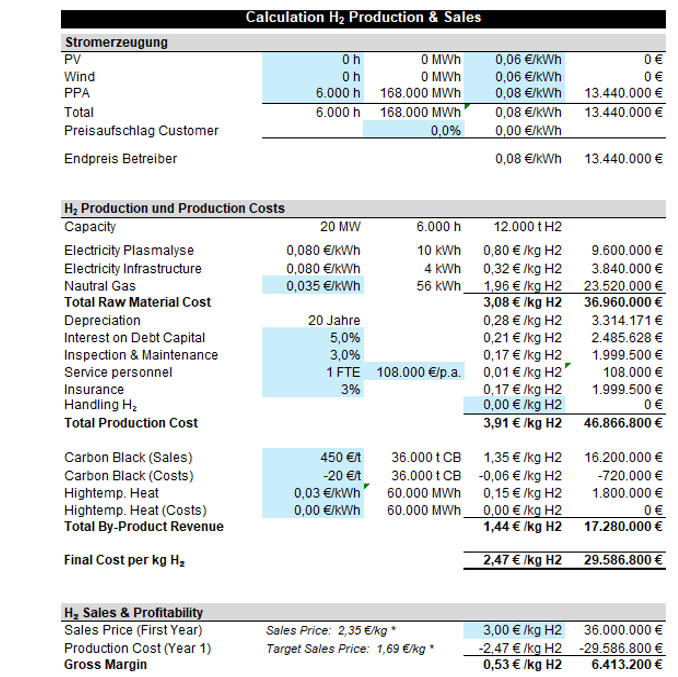
A business case analysis demonstrates the integration of a 20 MW Methane-Plasmalyzer® system (40 × 0.5 MW modules) into a German steel plant to supply hydrogen for Hydrogen-Based Direct Reduction (H₂-DRI). The study highlights the technical performance, hydrogen production capacity, and economic benefits of modular large-scale deployment.
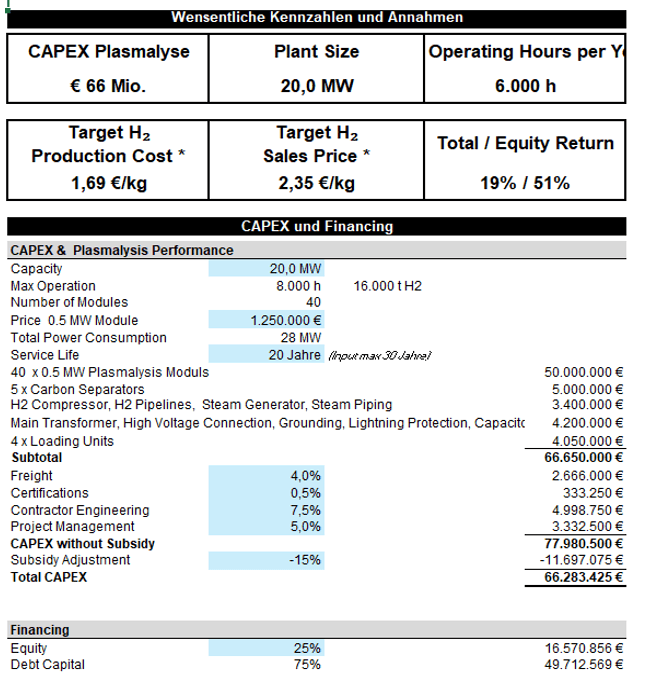
PERFORMANCE ECONOMICS & ENERGY
From approximately 80 kg/h of flare gas feed, the process produces hydrogen-rich product gas and 54.3 kg/h of solid carbon while recovering useful process heat. The plasma reactor operates above 1500°C and delivers a hydrogen concentration of approximately 96.1 mol%.
BYPRODUCT UTILIZATION
Sold to foundries and metallurgical industries.
Recoverable heat up to 750°C reused within the DRI process.
Supplies low-carbon hydrogen for steel production.
ADDITIONAL APPLICATIONS
Hydrogen-Based Direct Reduction (H₂-DRI) is one of the most promising pathways for reducing emissions in steel production. Graforce enables cost-effective hydrogen production from natural gas or biomethane without process-related CO₂ emissions while simultaneously generating valuable solid carbon and high-temperature process heat.
FAQ
It supplies low-carbon hydrogen for direct reduction while recovering solid carbon and process heat as valuable co-products.
Solid carbon can be used as a reducing agent, additive, or industrial material without creating process CO₂ emissions.
When renewable biomethane is used and biogenic carbon is permanently bound, the pathway can support negative carbon intensity.
High-temperature heat can be integrated into direct reduction and other high-temperature industrial processes.
Project-specific costs depend on plant size, operating hours, feedstock, electricity, and product revenues.
Does Our Technology Fit Your Application?
Discover how Graforce's Methane-Plasmalyzer® delivers low-carbon hydrogen, valuable carbon co-products, and high-temperature process heat for next-generation steel, lime, and cement production.