
Syngas Production
Hydrogen and carbon monoxide for industrial chemical synthesis.
CHEMICALS & REFINERIES
Graforce's Methane-Plasmalyzer® produces syngas (H₂ + CO) from methane and carbon dioxide using a fully electric plasma process. The technology supports sustainable chemical production, refinery integration, and synthetic fuel manufacturing.
INDUSTRY OVERVIEW
Syngas is one of the most important feedstocks in the chemical industry. Graforce converts methane and carbon dioxide into hydrogen and carbon monoxide through plasma technology, providing a CO₂-neutral to CO₂-negative alternative to steam methane reforming and gasification.
Hydrogen and carbon monoxide for industrial chemical synthesis.
Captured CO₂ becomes a valuable feedstock for syngas production.
No external fossil heat is required.
Scalable systems for refinery and chemical facilities.
GRAFORCE SOLUTION
Methane is dissociated in a high-temperature plasma reactor into hydrogen and carbon monoxide through plasma conversion. The adjustable gas ratio supports chemical synthesis, refinery integration, and synthetic fuel production.
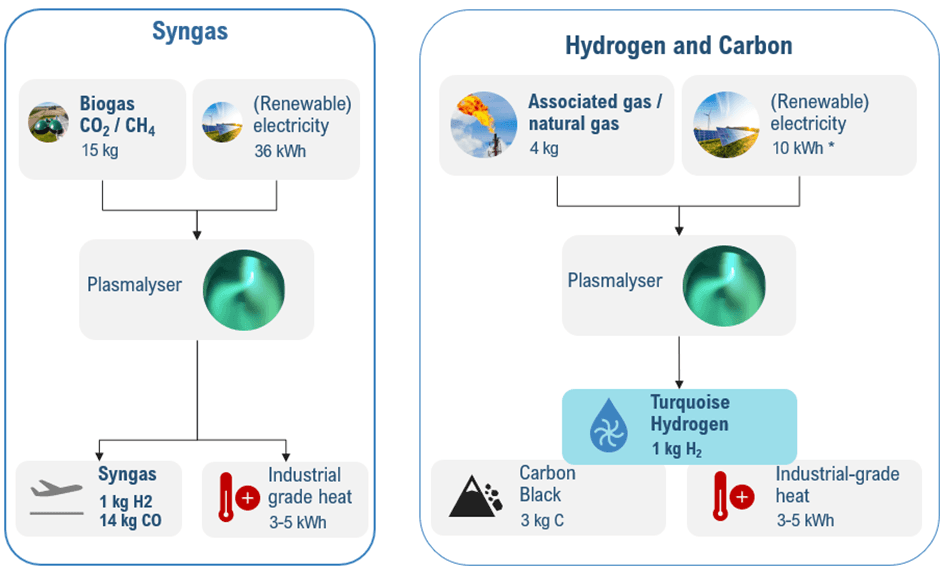
Natural gas, biomethane, LNG, LPG, flare gas, or biogas.
Electrical plasmalysis converts CH₄ and CO₂ into syngas.
Optimize the gas for downstream industrial processes.
Support refinery and synthetic fuel production.
APPLICATIONS
The produced syngas can be integrated into multiple industrial processes where hydrogen and carbon monoxide are essential feedstocks. Graforce's technology enables flexible downstream utilization for both chemical manufacturing and refinery operations.
Production of synthetic gasoline and kerosene.
Syngas as a key chemical feedstock.
Supports industrial synthesis processes.
Utilizes refinery CO₂ streams for syngas production.
BIOMETHANE PLASMALYSIS
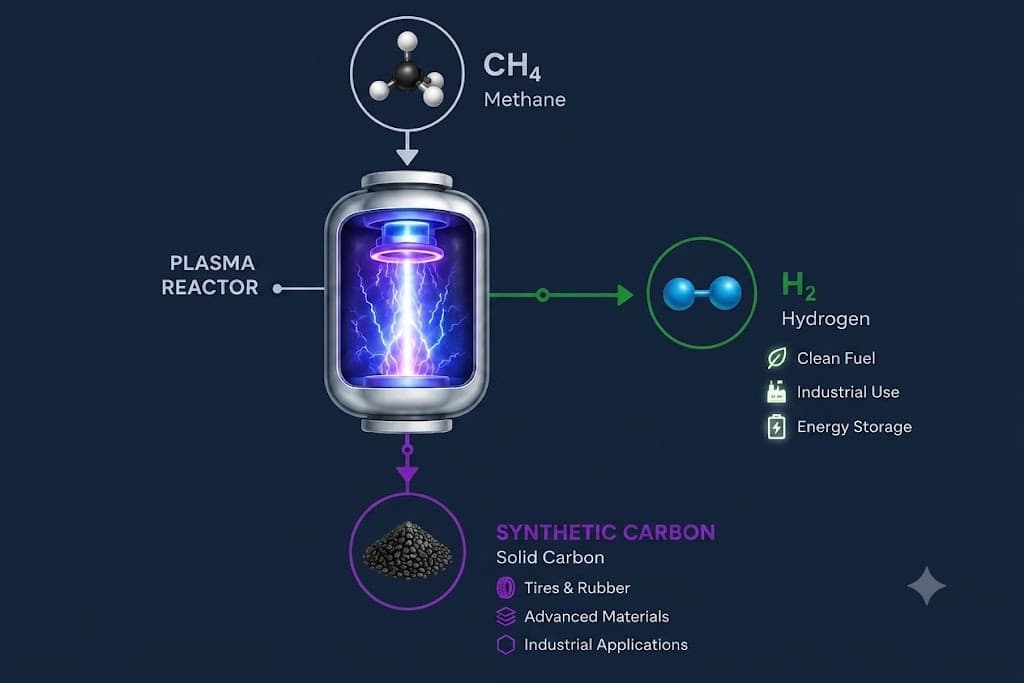
When biomethane is used as the feedstock, methane is separated into hydrogen and solid carbon without process-related CO₂ emissions. This provides an alternative to carbon capture and storage while enabling negative carbon intensity when renewable biomethane is used.
BYPRODUCT UTILIZATION
Optimized for different downstream applications.
Transforms captured CO₂ into valuable syngas.
Fully electric production without external fossil heat.
FAQ
Natural gas, biomethane, LNG, LPG, flare gas, biogas, and suitable captured CO₂ streams can be evaluated.
The plasma process and downstream purification are configured to deliver the ratio required by the application.
Syngas can support methanol, Fischer–Tropsch fuels, chemical synthesis, and refinery integration.
The process is fully electric, can utilize captured CO₂, and avoids the external fossil heat requirement of conventional reforming.
Does Our Technology Fit Your Application?
Discover how Graforce's plasma-based syngas production creates flexible, electric, and carbon-efficient feedstock for chemical and refinery applications.